Back to countries
countries
Lithuania
Lithuania
Lithuania, officially the Republic of Lithuania, is a country in the Baltic region of Europe. It is one of three Baltic states and lies on the eastern shore of the Baltic Sea, bordered by Latvia to the north, Belarus to the east and south, Poland to the south, and the Russian semi-exclave of Kaliningrad Oblast to the southwest, with a maritime border with Sweden to the west. Lithuania covers an area of 65,300 km2 (25,200 sq mi), and has a population of 2.9 million. Its capital and largest city is Vilnius; other major cities include Kaunas, Klaipėda, Šiauliai and Panevėžys. Lithuanians are the titular nation, belong to the ethnolinguistic group of Balts, and speak Lithuanian. For millennia, the southeastern shores of the Baltic Sea were inhabited by various Baltic tribes. In the 1230s, Lithuanian lands were united for the first time by Mindaugas, who formed the Kingdom of Lithuania on 6 July 1253. Subsequent expansion and consolidation resulted in the Grand Duchy of Lithuania, which by the 14th century was the largest country in Europe. In 1386, the grand duchy entered into a de facto personal union with the Crown of the Kingdom of Poland. The two realms were united into the Polish-Lithuanian Commonwealth in 1569, forming one of the largest and most prosperous states in Europe. The commonwealth lasted more than two centuries, until neighbouring countries gradually dismantled it between 1772 and 1795, with the Russian Empire annexing most of Lithuania's territory. Towards the end of World War I, Lithuania declared independence in 1918, founding the modern Republic of Lithuania. In World War II, Lithuania was occupied by the Soviet Union, then by Nazi Germany, before being reoccupied by the Soviets in 1944. Lithuanian armed resistance to the Soviet occupation lasted until the early 1950s. On 11 March 1990, a year before the formal dissolution of the Soviet Union, Lithuania became the first Soviet republic to break away when it proclaimed the restoration of its independence. Lithuania is a developed country with a high-income and an advanced economy ranking very high in Human Development Index. Lithuania ranks highly in digital infrastructure, press freedom and happiness. It is a member of the United Nations, the European Union, the Council of Europe, the Council of the Baltic Sea States, the Eurozone, the Nordic Investment Bank, the International Monetary Fund, the Schengen Agreement, NATO, OECD and the World Trade Organization. It also participates in the Nordic-Baltic Eight (NB8) regional co-operation format.
Rank
129
Coordinates
56.00, 24.00
Source
WBP almanac
Nearby in Lithuania
Albania
Albania
Andorra
Andorra
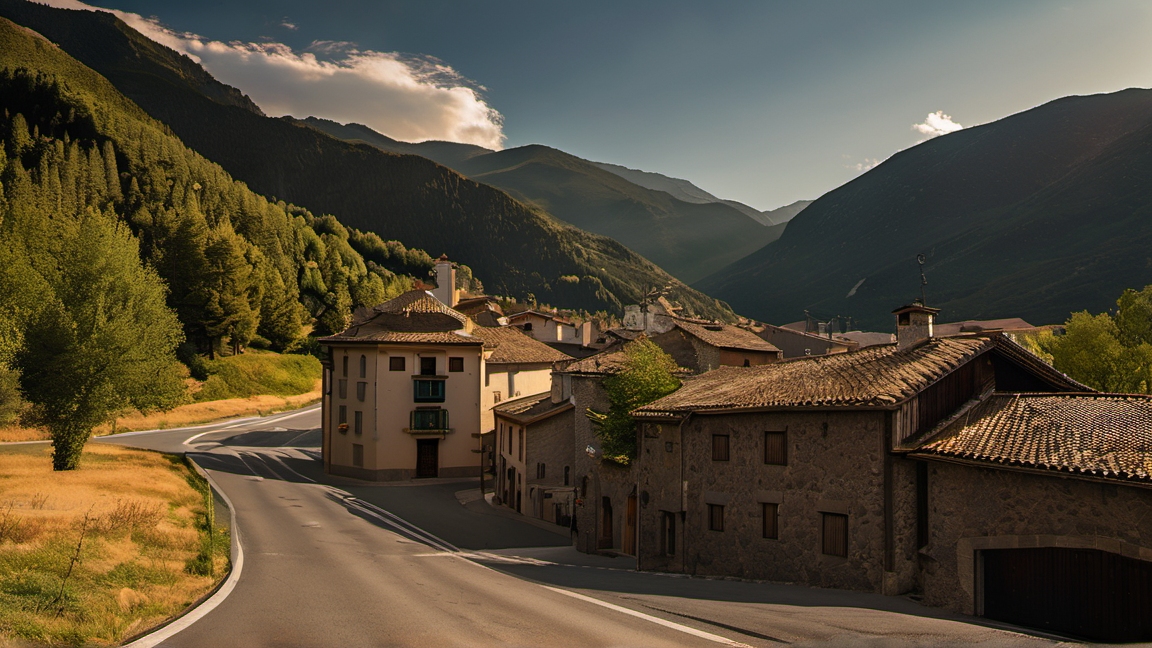
Andorra is a small, mountainous country in Western Europe, up in the Pyrenees between France and Spain. Full of beautiful mountains and charming old villages, the country thrives on tourism, mainly visitors from nearby countries who come for shopping, skiing, hiking, and banking.
Austria
Austria
Austria (German: Österreich) is a landlocked German-speaking country in Central Europe. Austria, along with neighbouring Switzerland, is the winter sports centre of Europe. However, it is just as popular for summer tourists who visit its historic cities and villages and hike in the magnificent scenery of the Alps. With more than 30 million arrivals (2023) and only about nine million inhabitants, i